Payments decision guide

Embedded Payments or Processor Choice? 9 POS Questions Before You Commit

Compare simplicity, economics, data control, outage readiness, and exit options before tying restaurant payments more closely to the POS.

Back to 86 the POS

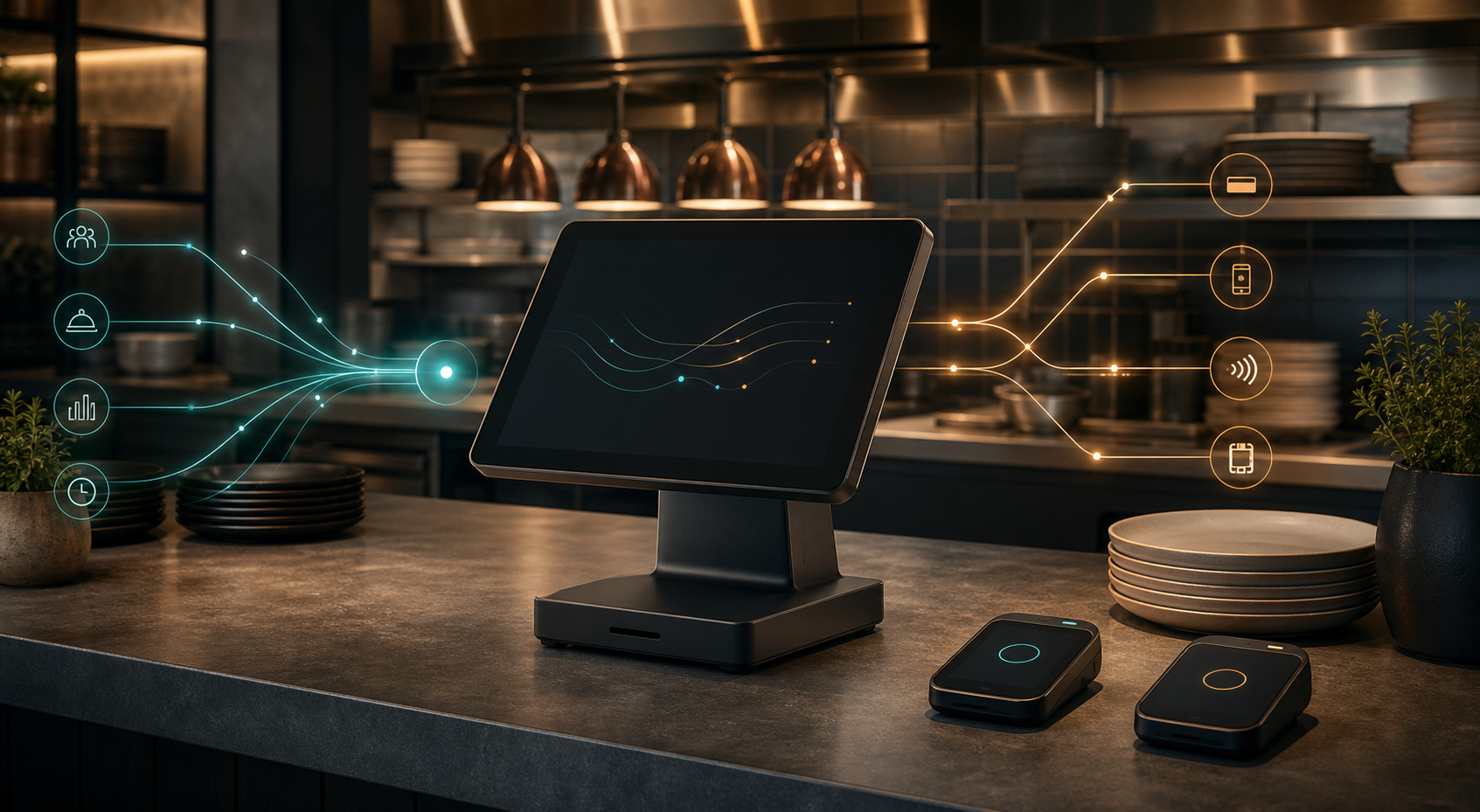
Unbranded restaurant point-of-sale station with abstract unified and flexible payment paths

Why this decision deserves attention now

Restaurant payment technology is moving in two directions at once. Some platforms are pulling payments, guest data, reporting, and financing into one operating system. Other integrations are emphasizing processor choice and interchangeable payment connections.

For a broader systems view, review the ServingIntel integrated operations platform.

On July 13, 2026, PYMNTS reported that restaurant technology platforms are placing financing alongside payments, ordering, and management software. Its analysis described a broader shift toward operating ecosystems that combine commerce software and financial services.

On July 16, Digital Transactions covered a restaurant POS integration with payment devices and a gateway. The underlying announcement presented the connection as processor-agnostic. Other July releases also emphasized tighter connections among processing, guest identity, order intelligence, and financing, reinforcing the need to compare bundled and flexible approaches carefully.

Those records describe specific vendors and do not prove that every product works the same way. Together, they make the operator choice timely: consolidate more financial functions with the POS provider, or preserve more separation between the operating system and payment stack. This is independent purchasing guidance, not an endorsement.

For neutral background and operating context, see National Restaurant Association economic research.

1. What is actually bundled?

List the legal provider and technical owner for POS software, gateway, processor, acquiring relationship, terminals, token vault, gift cards, online payments, dispute handling, settlement, guest identity, and any financing feature.

Ask the vendor to mark which components are native, resold, referred, or connected through a third party. Compare that system map with the broader restaurant software workflow.

Related infrastructure planning is available in ServingIntel POS hardware guidance.

2. Can you choose or change the processor?

Confirm whether processor choice exists at signing and after implementation. Ask which processors are supported today, whether the restaurant can bring an existing relationship, and what work is required to switch later.

Verify transaction types, devices, locations, online channels, gift cards, tips, refunds, and offline behavior. A connection that handles a basic sale may not support every restaurant workflow.

3. What is the normalized total cost?

Compare software, terminals, gateway charges, processing rates, per-transaction fees, online rates, chargebacks, statements, installation, support, replacements, minimums, and early termination over the same period.

A complementary portfolio perspective is available in the POS University system-evaluation guide.

Request a sample statement using the restaurant's actual channel mix, average check, card types, locations, and seasonal volume. Evaluate financing or faster settlement separately.

4. What data becomes available—and who controls it?

Ask who owns each data set, which identifiers are visible, how consent and retention are handled, and what can be exported through reports or APIs. Confirm whether useful history remains available after termination.

5. Who owns a failure from start to finish?

Document who responds when a terminal cannot connect, a payment is authorized but the order does not close, a refund fails, a deposit is missing, or an online payment cannot be matched to a check.

Use the following resource when assigning escalation and recovery ownership: ServingIntel support resources.

Ask for support hours, severity definitions, escalation contacts, status communications, and service targets. Run one payment incident, one POS incident, and one issue spanning both systems as a tabletop exercise.

6. What is the exit plan before you enter?

Request the offboarding sequence in writing, including notice periods, termination charges, device ownership, token portability, stored-value balances, open disputes, deposits in transit, report access, data exports, and replacement certification.

For additional independent reference material, review USDA Food Price Outlook.

If a feature works only with bundled processing or specific hardware, price that limitation into the decision. Review replacement assumptions against the POS hardware plan.

7. How does the restaurant operate during an outage?

Ask what happens when the internet, POS service, gateway, processor, or one terminal is unavailable. Confirm which transactions continue, what staff see, how limits are set, and how queued activity reconciles.

Test tips, split checks, voids, refunds, duplicate prevention, online orders, and end-of-day close. Give managers a clear continue, switch, or stop decision.

For another practical workflow in the portfolio, read the Support4POS payment-outage playbook.

8. What evidence supports security and compliance claims?

Request current, relevant documentation. Ask which party owns each part of the payment environment, which devices and integrations are approved, how access is controlled, how updates are delivered, and how incidents are communicated.

Have qualified security, legal, and payments advisers review claims that materially affect compliance or liability.

For additional restaurant and senior-living technology context, consult ServingIntel News & Insights.

9. Are financing features helping—or deepening dependency?

Identify the provider, eligibility rules, repayment method, total cost, effect of lower sales, reconciliation treatment, and what happens if the POS or processor relationship ends. Compare offers on the same amount, period, and assumptions. This article is not financial or legal advice.

The decision benchmark

A restaurant is ready to choose when the team can answer four questions:

  1. Which organization owns every critical part of the payment flow?
  2. What will the restaurant pay under its real transaction mix?
  3. How will service continue and reconcile when one layer fails?
  4. What data, devices, and options remain if the relationship ends?

Embedded payments can reduce handoffs and connect useful operating data. Processor flexibility can preserve negotiating room and limit dependence on one platform. The stronger choice is the one whose tradeoffs are documented, tested, and priced across the full life of the POS decision.

For a final neutral reference point, consult Federal Trade Commission business guidance.

Related resources

Evaluate the operating system behind the payment decision

Payment architecture affects software fit, device planning, support ownership, and the restaurant's ability to change systems later.

  • Restaurant and dining software options
  • POS hardware options
  • ServingIntel News & Insights