Why this deserves attention now
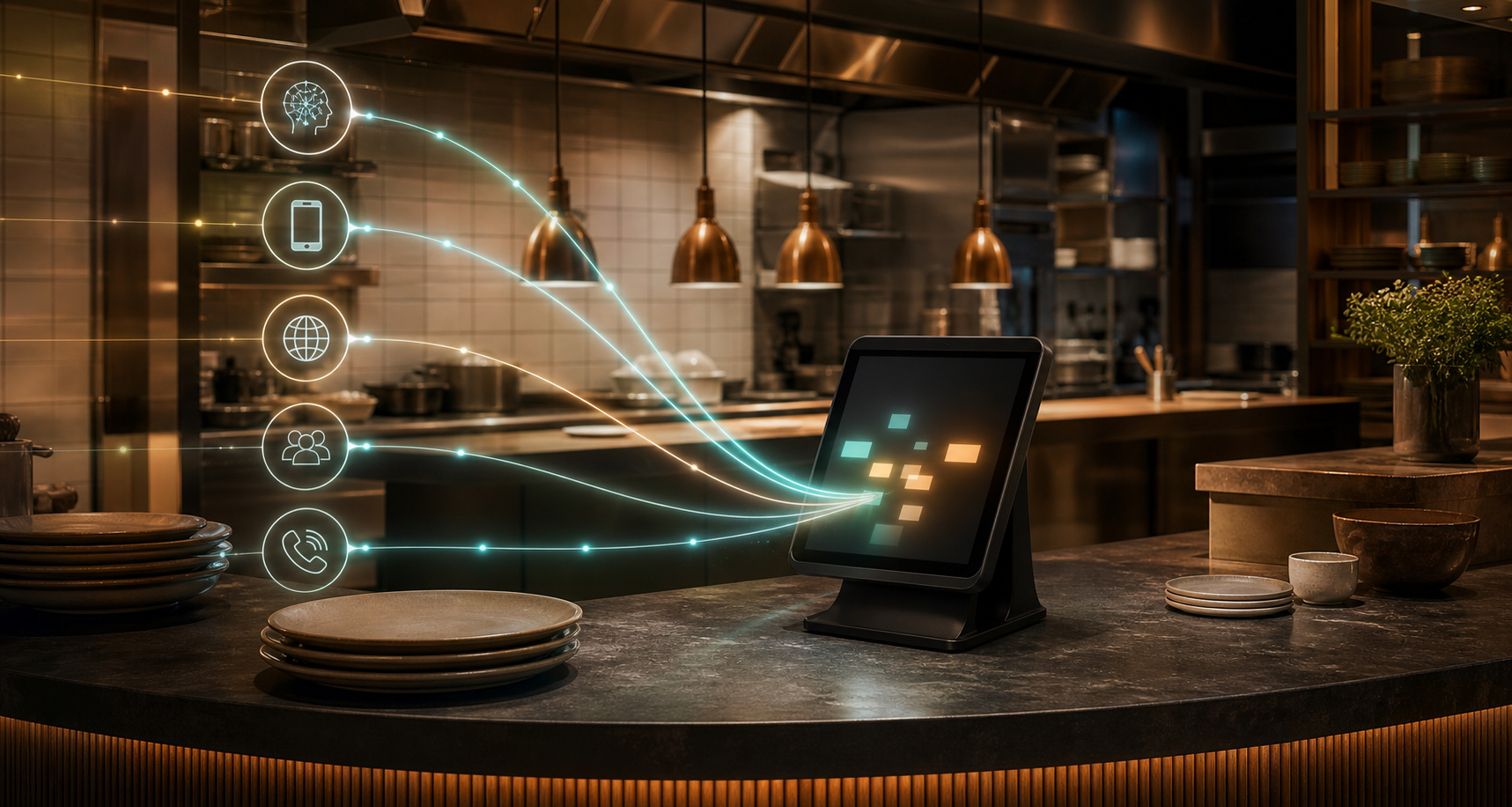
AI-assisted discovery is starting to connect directly to restaurant ordering systems. The important question for operators is not whether the channel sounds futuristic. It is whether the menu, modifiers, availability, payments, kitchen routing, reporting, and guest-recovery process can handle another source of orders without creating more exceptions.
For a broader systems view, review the ServingIntel integrated operations platform.
On July 1, 2026, Block announced that eligible U.S. food-and-beverage sellers using its online-ordering product could be discovered through new AI integrations, with supported orders routed into existing POS and kitchen-display workflows. The primary release also said channel attribution would appear in reporting.
On July 8, Food On Demand reported on that launch alongside another late-June integration centered on synchronizing menus, ordering, loyalty, and reporting. On July 13, Payments Dive examined an adjacent mobile-wallet ordering and loyalty program, describing the strategic push to connect restaurant discovery, ordering, payment, and repeat visits.
Those announcements are vendor-specific, but the operating lesson is broader: new discovery surfaces can become order-entry points, and the POS catalog increasingly determines what those channels can promise. That makes readiness an operations and data-quality question, not simply a marketing decision. This checklist is independent operator guidance, not an endorsement of any platform.
For neutral background and operating context, see National Restaurant Association economic research.
1. Identify who controls participation
Confirm whether a new channel is opt-in, opt-out, or automatically enabled for eligible locations. Document who can change that setting and whether it applies at the account, brand, location, or revenue-center level.
Ask the provider to show the exact setting in your environment, the effective date, the locations included, and the steps required to pause the channel. Assign one accountable owner before the first order arrives.
Related infrastructure planning is available in ServingIntel POS hardware guidance.
2. Treat the menu as production data
Review item names, descriptions, prices, taxes, service charges, hours, fulfillment options, and location-specific availability. Remove obsolete items and internal shorthand that was never meant for guests.
Use the same discipline you would apply during a POS migration: one approved source, named owners, and a change log. If the catalog is fragmented, review the connected restaurant software workflow before adding another channel.
3. Test modifiers and constraints
Build a test set around the combinations most likely to fail:
A complementary portfolio perspective is available in the POS University system-evaluation guide.
- Required modifiers with no default selection
- Maximum and minimum choice rules
- Half-and-half, size, and nested modifier logic
- Sold-out ingredients and temporary item pauses
- Time-limited menus and daypart changes
- Alcohol, age-restricted items, and location-specific restrictions
- Allergy notes and special instructions
- Combos whose price depends on several choices
Run the tests from discovery through payment, production routing, and the guest receipt. Record the expected result before testing so teams do not normalize a bad outcome simply because the order technically reached the kitchen.
4. Protect the kitchen from a new source of noise
Map where these orders appear, how they are labeled, what alert they trigger, which prep stations receive them, and how promised times are calculated. Check whether an order can arrive when the location is paused, near closing, or beyond practical capacity.
Confirm whether staff can identify the source quickly, throttle intake, adjust prep times, and stop orders during an outage. Include the new path in opening, shift-change, and closing checks.
Use the following resource when assigning escalation and recovery ownership: ServingIntel support resources.